Why Fire Door & Compartmentation Compliance is a Critical Responsibility for Facilities Management.
Fire door and compartmentation compliance is a fundamental aspect of facilities management, playing a vital role in protecting life, safeguarding assets, and ensuring compliance with UK fire safety legislation.
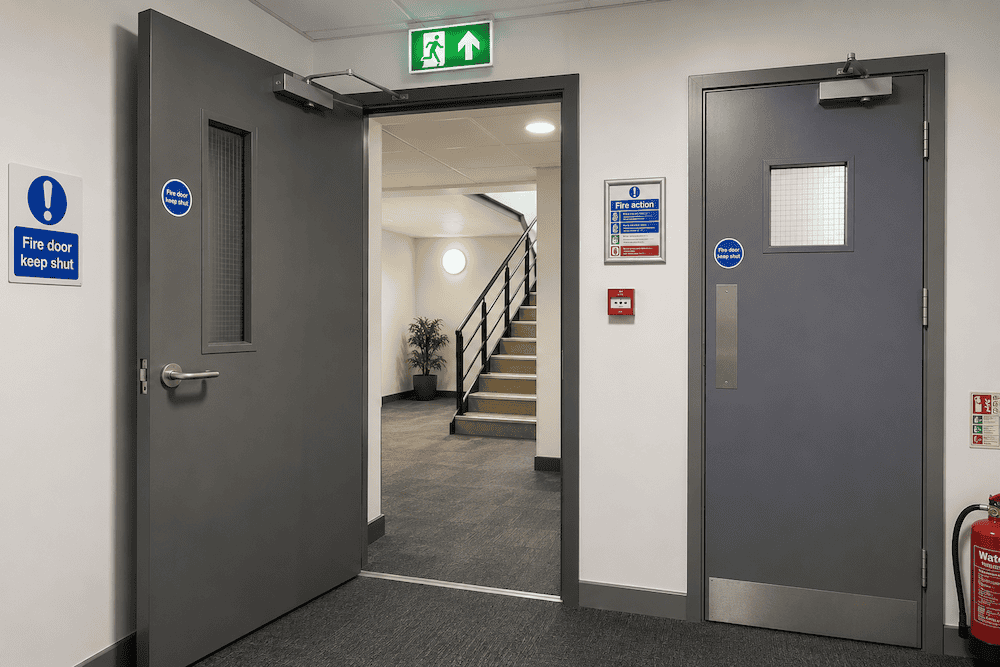
Passive fire protection is designed to contain the spread of fire and smoke by dividing buildings into fire-resistant compartments, maintaining protected escape routes and allowing valuable time for occupants to evacuate and emergency services to respond.
However, compliance extends far beyond the initial installation of fire doors and compartmentation systems. It requires a robust inspection, maintenance, and remediation programme supported by competent professionals.
Best practice includes:
🔹 Routine Inspections – Regular documented visual inspections should verify that fire doors are operating correctly, have not been damaged or altered, are not being wedged open, that intumescent and smoke seals remain intact, and that self-closing devices fully engage.
🔹 Statutory Compliance – Under the Fire Safety (England) Regulations 2022, responsible persons for multi-occupied residential buildings must undertake:
– Quarterly inspections of all communal fire doors.
– Annual best-endeavour inspections of flat entrance doors leading onto communal areas.
🔹 Competent Maintenance & Remediation – Where defects are identified, inspections, maintenance, and repairs should be undertaken by suitably trained and certified professionals. The complete fire door set—including the door leaf, frame, glazing, hinges, ironmongery, seals, and self-closing devices—must be assessed to ensure continued compliance with relevant British Standards and fire performance requirements.
As Luke Fleming, Facilities Help Desk Manager at Fairhurst Buckley explains:
“For Facilities Managers, maintaining accurate inspection records, demonstrating compliance, and proactively addressing defects are essential elements of an effective fire safety strategy. A compliant passive fire protection programme not only fulfils legal obligations but significantly enhances the safety and resilience of the buildings under your care.
“At Fairhurst Buckley, we support clients with comprehensive fire door inspections, compartmentation surveys, digital compliance reporting, and remedial works, helping ensure buildings remain safe, compliant, and audit-ready.”
Image created using AI – ChatGPT